Table of Contents
Join Now and Get Your First Consultation Free!
Secure your health with a yearly membership for just €29.90. Sign up today and enjoy peace of mind with expert care at your fingertips!
Get Started
The Future of Healthcare
Healthcare is changing quickly with the help of AI scribes, wearable devices, home blood testing, and other digital tools. These technologies may reduce paperwork for doctors, support remote monitoring, and make care more convenient for patients. This article explains in simple terms how smart healthcare technology is shaping the future of patient care, what benefits it may offer, and why human oversight still matters.
The Future of Healthcare: Simple Tech That Can Make Care Easier
Disclaimer: This article is for educational purposes only and does not replace medical advice, diagnosis, treatment, or emergency care.
Author: Dr. Diellza Rabushaj
Healthcare is changing fast. New tools like AI scribes, smart wearables, home blood sampling, and digital support systems may help doctors work better and help patients get easier care at home. Recent reviews show that these technologies are promising, but they still need careful testing and safe use in real clinical practice.
1. AI scribes can reduce paperwork
Doctors spend a lot of time writing notes. AI scribes can listen during consultations and help prepare medical documentation. This may reduce administrative burden and burnout for healthcare professionals [1,2].
2. Large language models may help in clinical work
Large language models are being studied for patient communication, clinical support, and workflow improvement. Reviews suggest they have strong potential, but real-world use is still limited and needs close oversight, privacy protection, and quality control [3,4].
3. Home blood collection is becoming more realistic
Microsampling and self-collection blood tools may make testing easier for patients at home. These methods could support future remote monitoring, but standardization is important for accurate and reliable results [5-7].
4. Smart devices can help track health
Wearables are no longer only fitness tools. They are being studied for monitoring patient outcomes, including heart rate variability. These devices may help show trends over time, but they should support, not replace, medical assessment [10-12].
5. Technology still needs human support
Digital tools work best when patients also get help from people. Research on digital navigators shows that human guidance can improve access, engagement, and confidence when using healthcare technology [13,14].
6. The bigger picture
Other fast-growing areas include concierge medicine, AI in drug discovery, and digital twins in healthcare. These fields may improve access, personalization, and innovation, but they also raise questions about fairness, cost, and implementation [15-19].
7. What this means for patients
The main idea is simple: healthcare is moving closer to the patient. In the future, more care may happen through online consultations, remote monitoring, home testing, and smarter digital systems. That could mean more convenience, faster follow-up, and less pressure on clinics [1-19].
Conclusion
Healthcare technology is becoming more practical, more personal, and more home-based. AI tools, wearables, and remote testing may improve both patient care and clinician workflow. Still, these tools should be used carefully, with strong standards, privacy protection, and human oversight [1-19].
FAQs
1. What is an AI scribe?
An AI scribe is a tool that helps create clinical notes during or after a consultation [1,2].
2. Can wearables replace a doctor visit?
No. They can support monitoring, but they do not replace professional medical care [10-12].
3. What is microsampling?
It is a way to collect very small blood samples, sometimes outside the clinic [5-7].
4. Are LLMs already widely used in hospitals?
They are being studied a lot, but real-world use is still developing [3,4].
5. Why is human support still important?
Because patients often need help using digital tools correctly and confidently [13,14].
References
- Olson et al. Use of Ambient AI Scribes to Reduce Administrative Burden and Professional Burnout. 2025.
- Hassan et al. Special Topic on Burnout: Clinical Implementation of Artificial Intelligence Scribes in Healthcare: A Systematic Review. 2025.
- Busch et al. Current applications and challenges in large language models for patient care: a systematic review. 2025.
- Artsi et al. Large language models in real-world clinical workflows: a systematic review of applications and implementation. 2025.
- Mora, Mace. Standardization of Microsampling Technologies for Accurate Sensing and Reliable Diagnostics. 2025.
- Cannon et al. Feasibility of a novel self-collection method for blood samples and its acceptability for future home-based PrEP monitoring. 2022.
- Baillargeon, Mace. Microsampling tools for collecting, processing, and storing blood at the point-of-care. 2022/2023 indexing.
- Leipheimer et al. First-in-human evaluation of a hand-held automated venipuncture device for rapid venous blood draws. 2019.
- Chen et al. Portable robot for autonomous venipuncture using 3D near infrared image guidance and force feedback. 2013.
- Lodewyk et al. Wearables research for continuous monitoring of patient outcomes: A scoping review. 2025.
- Li et al. Heart Rate Variability Measurement through a Smart Wearable System: A Review. 2023.
- Dobbs et al. The Accuracy of Acquiring Heart Rate Variability from Portable Devices: A Systematic Review and Meta-Analysis. 2019.
- Perret et al. Standardising the role of a digital navigator in behavioural health: a systematic review. 2023/2025.
- Chen et al. The Digital Navigator: Standardizing Human Technology Support in App-Integrated Clinical Care. 2024.
- Rylands et al. Maximizing the Value of Concierge Medicine: A Systematic Review of Cost, Access, and Outcomes. 2025.
- Gangwal, Lavecchia. Unleashing the power of generative AI in drug discovery. 2024.
- Zhang et al. Artificial intelligence in drug development. 2025.
- Ringeval et al. Advancing Health Care With Digital Twins: Meta-Review of Applications and Implementation Challenges. 2025.
- Tudor et al. A scoping review of human digital twins in healthcare applications and usage patterns. 2025.
Written by Diellza Rabushaj, Medical Writer & Researcher.
Recommended articles for You
Discover how AI scribes, wearables, home testing, and digital health tools are making healthcare easier, faster, and more patient-centered.


A clinical guide to semaglutide safety and side effects.
Application
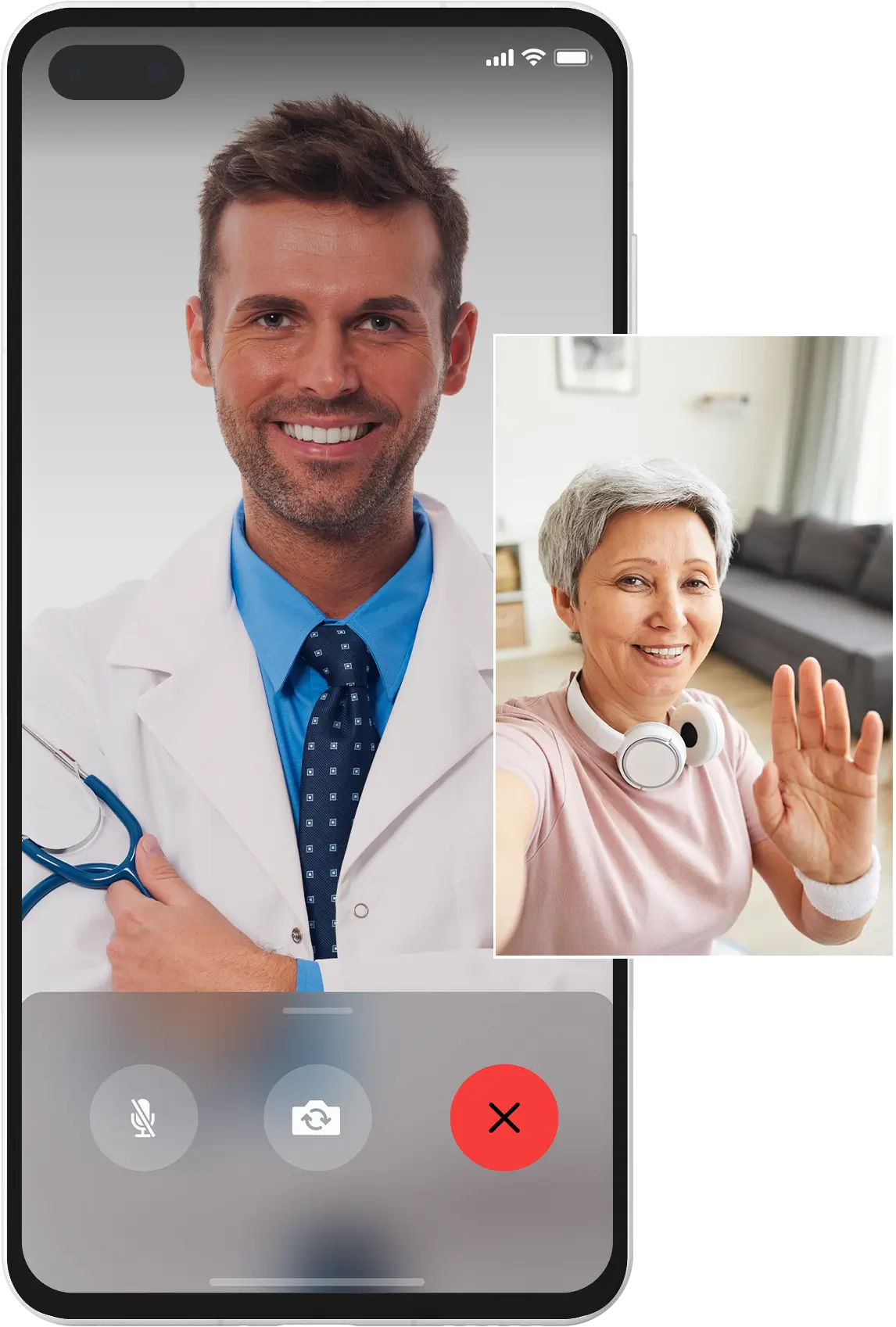
Get Doctors - 365 App !
Consult with qualified doctors of any profile in online video, audio and chat 24/7