Table of Contents
Join Now and Get Your First Consultation Free!
Secure your health with a yearly membership for just €29.90. Sign up today and enjoy peace of mind with expert care at your fingertips!
Get Started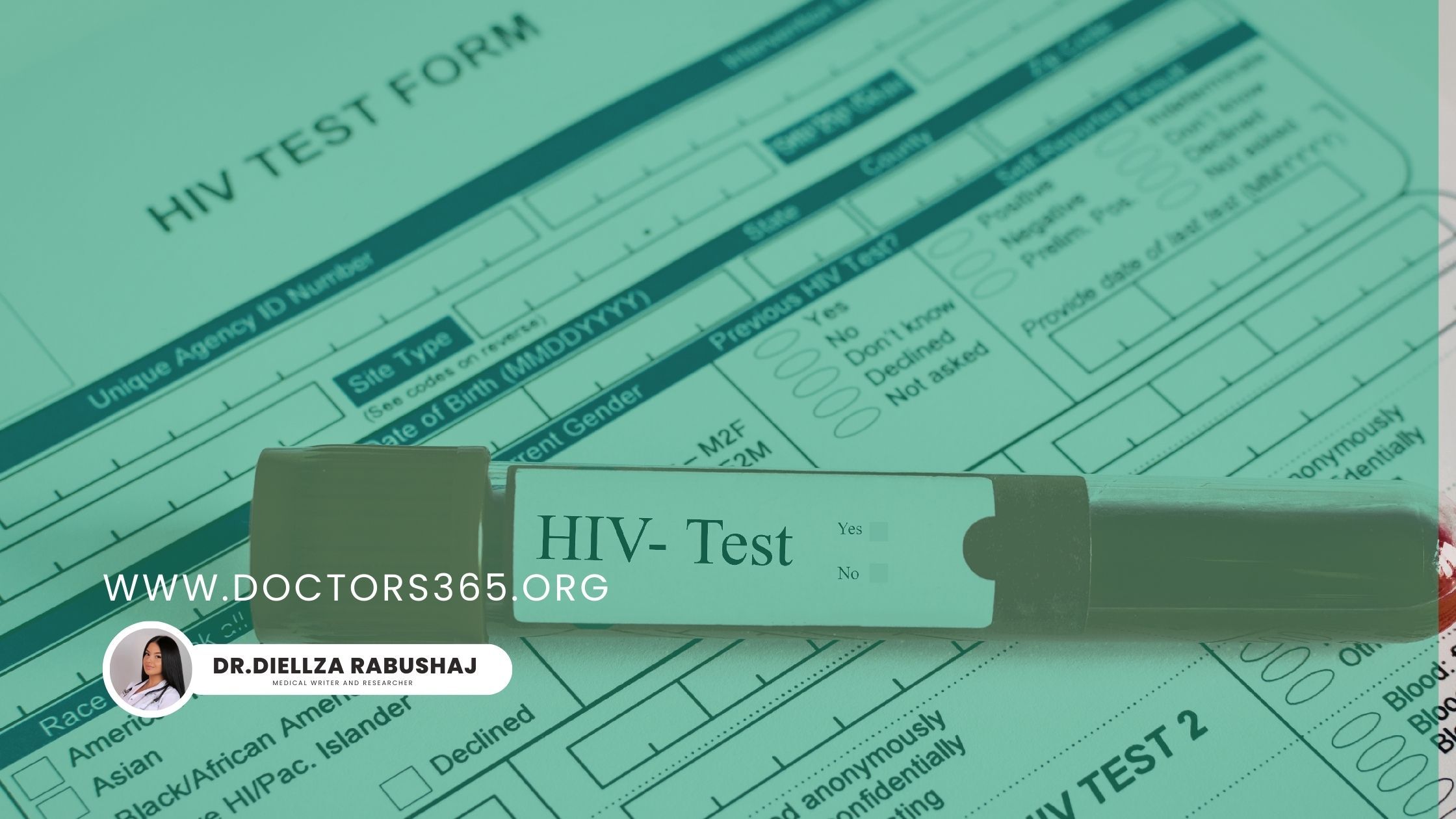
HIV Home Test: What to Know
Home HIV testing can make screening more private and accessible—especially for people who avoid clinics due to stigma, distance, or time constraints. This patient-friendly guide explains the main types of home HIV tests (rapid self-tests and home sample collection), how to use them correctly, and what results really mean. It also highlights common barriers like cost and the risk of misunderstanding results, plus why timing after a potential exposure matters. You’ll learn practical steps for follow-up after a negative, reactive/positive, or invalid result, and how to connect to trusted online care through doctors365.org for guidance, confirmatory testing planning, and referrals when needed.
Disclaimer (Please Read First)
This article is for educational purposes only and is not a substitute for medical advice, diagnosis, or emergency care. If you think you may have had a recent high-risk HIV exposure, have severe symptoms, or feel unsafe, seek urgent in-person medical care immediately.
Author: Dr. Diellza Rabushaj
1. Home HIV Testing: What It Is, Who It Helps, and Why It Matters
HIV testing can be emotionally loaded. Some people worry about stigma. Others avoid clinics because of time, privacy concerns, or fear of being judged. That’s exactly where home HIV testing can help—by bringing testing into a private space where you control the timing and environment. Rapid HIV self-tests approved for home use have been described as a way to expand screening and increase awareness, especially among people who might not otherwise test. [1–2]
1.1 Why testing early is powerful
Knowing your HIV status early matters because:
- If the result is negative, you can make a plan to stay negative (safer sex, prevention strategies, follow-up testing when appropriate). [1]
- If the result is positive, early medical care and treatment pathways can be started—home testing programs have shown strong rates of people seeking results and receiving referrals to medical care. [3]
1.2 Two main types of home HIV tests
Home HIV testing generally falls into two categories:
- At-home self-tests (rapid tests): you collect the sample yourself (often oral fluid for the widely known oral self-test) and read the result at home. Oral HIV self-testing has been described as a high-impact tool for identifying HIV cases. [2]
- Home sample collection tests: you collect a sample at home and send it to a lab/service for processing and results. Large-scale home sample collection programs have shown substantial uptake among at-risk people and those not previously tested. [3]
1.3 Who home testing can reach
Home testing can be especially helpful for people who:
- haven’t tested before due to stigma or fear [1–3]
- live far from clinics or have transportation barriers [5]
- want privacy or flexibility (night shifts, childcare, travel, etc.) [1–2]
- belong to groups with higher HIV risk and prefer discreet testing options [1–4]
1.4 What home testing can’t replace
Home HIV testing is a screening tool, not the entire care journey. A reactive/positive home test needs confirmatory testing and medical follow-up. Also, timing matters—testing too soon after an exposure can give a negative result even if infection occurred (more on this below). [1–2]
2. What Research Shows: Benefits, Barriers, and Real-World Use
Home testing is one of those healthcare ideas that sounds perfect—until you ask the real question: Will people actually use it, and will it lead to care? Research highlights both the promise and the practical barriers. [1–5]
2.1 Home testing can increase screening—but adoption matters
A major point raised in early commentary about rapid home HIV tests is that approval alone doesn’t guarantee impact. The public health benefit depends on whether people at higher risk actually adopt the test—and whether common challenges (like misunderstanding results) are addressed. [1]
2.2 Cost is a real barrier
Oral HIV self-testing (including the widely recognized home oral test) has been described as high impact for increasing HIV case identification, but adoption can be limited by high retail cost. That means some people who would benefit most may still avoid testing simply because it’s not affordable. [2]
2.3 Home sample collection can reach people who haven’t tested
One large report on in-home sample collection testing showed very high real-world use: 174,316 tests submitted, with 0.9% positive results. Many users were people at risk and people who had not previously tested. Importantly, 97% of users called for results, and most people with HIV-positive results had or received referrals to medical care. [3]
That pattern is encouraging: a home option can bring people into the “testing → results → care” pathway, even when clinic-based testing wasn’t happening. [3]
2.4 Adding online support can improve comfort and follow-through
For some people, the hardest part isn’t the swab—it’s the waiting, the anxiety, and the “what now?” feeling.
A pilot study explored at-home self-administered HIV testing paired with web-based peer counseling via video chat among men who have sex with men. It reported that the approach was feasible and satisfactory in this small sample. [4] While it’s not a large trial, it highlights something important: support can be built around home testing, not just handed off afterward. [4]
2.5 Willingness is high in some groups, but completion can lag
Among young adults who use opioids in rural Appalachia, a study found high willingness to participate in at-home HIV testing (with a substantial proportion indicating likelihood and consenting), but noted that completion rates were lower due to other barriers. [5]
Many people are open to home testing—yet real-world barriers (life instability, logistics, fear, privacy, follow-up access) can still get in the way. [5]
## 3. How to Use a Home HIV Test Safely (And What Results Really Mean)
If you’re going to test at home, you deserve clarity—especially about timing and next steps. This section is designed to be calm, practical, and easy to follow.
3.1 Before you test: timing and “window period” basics
A home test can feel like instant certainty, but HIV testing depends on timing. If you test too soon after a possible exposure, the result may be negative even if infection occurred. Concerns about misinterpretation of results have been highlighted as a challenge with home tests, which is why timing education is essential. [1]
Practical, patient-friendly approach:
- If the exposure was very recent and you’re worried, treat a negative home test as “not yet confirmed” and plan follow-up testing and/or medical guidance. [1–2]
- If you’re not sure when to test, getting quick professional guidance can prevent false reassurance and reduce anxiety. [1]
(Your clinician can help you choose the right test type and timing based on your situation.)
3.2 Step-by-step: at-home oral swab testing
Oral HIV self-testing has been described as an important tool for identifying cases, but it works best when instructions are followed carefully. [2]
Common-sense checklist:
- Read the instructions fully before you open the kit (so you don’t rush mid-way).
- Avoid eating/drinking right before testing if the kit instructions warn against it.
- Swab exactly as directed.
- Use a timer for the result window.
- Read the result only within the recommended time frame (reading too early or too late can confuse results). Concerns about misinterpretation have been noted as an adoption challenge. [1]
3.3 Step-by-step: home sample collection tests
Home sample collection has shown high uptake and strong follow-through for getting results. [3]
Key points:
- Collect the sample exactly as instructed.
- Package and mail/submit it promptly.
- Keep your tracking information.
- Make a plan for how you’ll receive results and what you’ll do next—because the “waiting period” can be stressful, and having a plan reduces panic. [3]
3.4 Interpreting results: negative, positive, and invalid
This is where many people feel stuck—so here’s the simplest, safest framing:
- Negative result: reassuring, but timing matters. If the test was taken soon after a potential exposure, plan follow-up testing or professional guidance. Misinterpretation risk has been highlighted, which includes misunderstanding what “negative today” means after a recent exposure. [1]
- Reactive/positive result: treat it as preliminary until confirmatory testing is completed. Then move quickly to medical care and support pathways—home testing programs show strong linkage behaviors when referrals are provided. [3]
- Invalid/unclear result: repeat testing or get guidance. Confusing results are one reason support and clear instructions matter. [1]
3.5 Next steps: confirmatory testing and treatment
A positive home test is not the end of the story—it’s the beginning of getting care.
Home sample collection programs have shown that most people with HIV-positive results had or received medical care referrals, which is a key part of making home testing meaningful. [3] Similarly, implementation reviews emphasize that self-testing can increase identification, but real impact depends on successful pathways into care and on removing barriers like cost. [2]
3.6 Privacy, emotions, and support
Home testing is private—but it can also feel isolating.
If you’re testing alone, it helps to:
- choose a time when you’re not rushed
- identify one trusted person you could contact if you feel overwhelmed
- plan a next step before you test (for example: “If I’m worried about timing or I get a reactive result, I’ll speak to a clinician today.”)
Supportive counseling integrated with home testing has been shown feasible in pilot research, suggesting that pairing testing with real-time support can be acceptable and helpful for some people. [4]
4. Getting Care with doctors365.org: Fast Guidance, Trusted Doctors, and Next Steps
Home HIV testing is most powerful when it’s connected to care. That means: understanding timing, interpreting results correctly, and knowing what to do next without delay.
4.1 How doctors365.org works
Using doctors365.org is designed to be straightforward:
- Browse doctors and specialties on doctors365.org
- Pick a time that works for you
- Confirm & pay
- Join a secure online visit
- Receive a clear medical summary and next steps (including referrals and documentation when clinically appropriate)
4.2 Benefits: privacy, convenience, and continuity
Home HIV testing is often chosen for privacy—so it makes sense to pair it with a platform that respects privacy and reduces friction:
- Convenience: no travel time, easier scheduling
- Privacy: discuss sensitive topics comfortably
- Continuity: follow-up support after testing (timing questions, next test planning, referrals)
These advantages directly address common barriers to adoption and follow-through described in implementation-focused work (including concerns like cost and the need to support correct interpretation). [1–2]
4.3 Quality and trust
When it comes to HIV testing and sexual health, quality is not just about knowledge—it’s about clear guidance and safe next steps.
- Verified clinicians and clinical oversight help ensure decisions are appropriate.
- Secure communication supports privacy and reduces fear of stigma.
- Clear summaries help patients understand what happens next.
4.4 Pricing and availability
Pricing varies based on specialty and appointment type. Availability depends on clinician schedules. The easiest approach is to:
- browse the relevant specialty page,
- choose a suitable appointment length,
- and select the earliest available slot if you’re testing due to a recent concern.
4.5 How to prepare for an online consultation
To make your consultation efficient and supportive, consider having:
- the type of test you used (oral self-test vs home sample collection) [2–3]
- the date and time you tested
- the result you saw (negative/reactive/invalid)
- the date of any possible exposure (approximate is fine)
- any symptoms you’re worried about (and when they started)
4.6 What’s suitable online vs in-person (red flags)
Often suitable online:
- understanding when to test and whether you tested at the right time [1–2]
- next-step planning after a negative test with recent exposure concern [1]
- guidance after a reactive/positive home test (confirmatory testing plan, referrals) [3]
- counseling support and anxiety management around testing [4]
Seek urgent in-person care if:
- you feel very unwell, faint, severely dehydrated, or unsafe
- you need urgent post-exposure guidance after a very recent high-risk event
- you have severe mental distress or thoughts of self-harm (seek emergency support immediately)
4.7FAQs
FAQ 1: Is a home HIV test reliable?
Home tests can be useful screening tools, but correct use and correct timing are essential. Misinterpretation and timing confusion have been highlighted as key challenges, which is why follow-up guidance matters. [1–2]
FAQ 2: If my home HIV test is negative, am I definitely negative?
A negative result can be reassuring, but if the test is taken too soon after a possible exposure, it may not reflect the most recent risk. Getting guidance on timing and follow-up testing is important. [1]
FAQ 3: What should I do if my home test is reactive/positive?
Treat it as preliminary until confirmatory testing is completed. Home sample collection testing programs show that most people with positive results had or received medical care referrals—linkage to care is the next step. [3]
FAQ 4: Can home testing help people who avoid clinics?
Yes. In-home sample collection has shown high uptake, including among at-risk individuals and those not previously tested. Home testing can reduce barriers like stigma and convenience issues. [3]
FAQ 5: Why do some people still not use home HIV tests?
Adoption can be limited by barriers such as cost and concerns about correct interpretation. Studies and reviews emphasize that implementation details—support, accessibility, and affordability—shape impact. [1–2]
References
- Thrun M, Gardner E, Rietmeijer C. Home HIV testing: if you build it, will they come? AIDS (London). 2013.
- Estem KS, Catania J, Klausner J. HIV Self-Testing: a Review of Current Implementation and Fidelity. Current HIV/AIDS Reports. 2016.
- Branson B. Home sample collection tests for HIV infection. JAMA. 1998.
- Maksut JL, Eaton LA, Siembida E, Driffin DD, Baldwin R. A Test of Concept Study of At-Home, Self-Administered HIV Testing With Web-Based Peer Counseling Via Video Chat for Men Who Have Sex With Men. JMIR Public Health and Surveillance. 2016.
- Ballard A, Haardöerfer R, Prood N, Mbagwu C, Cooper H, et al. Willingness to Participate in At-Home HIV Testing Among Young Adults Who Use Opioids in Rural Appalachia. AIDS and Behavior. 2020.
Written by Diellza Rabushaj, Medical Writer & Researcher.
Recommended articles for You

Simple review of H₂ therapy evidence from human studies.
A practical, evidence-based guide to home BP, oxygen, and glucose monitoring for older adults.
What research says about vaping for quitting smoking and heart–lung risks.
Application
Get Doctors - 365 App !
Consult with qualified doctors of any profile in online video, audio and chat 24/7