Table of Contents
Join Now and Get Your First Consultation Free!
Secure your health with a yearly membership for just €29.90. Sign up today and enjoy peace of mind with expert care at your fingertips!
Get Started
The Future of Medicine
Medical technology is rapidly transforming healthcare through artificial intelligence, gene editing, robotics, and wearable devices. This article explores how innovations like AI diagnostics, CRISPR, 3D bioprinting, and nanomedicine are reshaping modern medicine. Learn how precision medicine personalizes treatments, how telemedicine improves access, and how platforms like Doctors365 make advanced healthcare accessible anytime. Discover the benefits, limitations, and future of medical technology in 2026 and beyond.
1. Introduction & Medical Disclaimer
Disclaimer: This article is for educational purposes only and does not replace professional medical advice, diagnosis, or emergency care. Always consult a licensed healthcare provider.
Have you ever wondered how medicine is changing so fast? From AI reading scans to wearable devices tracking your health 24/7, medical technology is transforming healthcare from reactive treatment to proactive prevention.
In 2026, healthcare is no longer just about treating disease—it’s about predicting, preventing, and personalizing care.
2. What Is Medical Technology?
Medical technology (MedTech) refers to the use of advanced tools—like artificial intelligence, robotics, and biotechnology—to improve diagnosis, treatment, and patient monitoring.
2.1 Evolution from Reactive to Preventive Care
Traditionally, healthcare was reactive:
- You felt symptoms → you visited a doctor → you got treatment
Now, it’s proactive:
- Devices detect early signs → AI predicts risk → treatment starts earlier
This shift reduces complications and improves survival rates [1].
2.2 Role of AI, Genomics, and IoT
Modern MedTech combines:
- AI & Machine Learning → detect patterns in imaging and data
- Genomics → personalize treatments
- Wearable IoT devices → monitor health in real time
Together, they create a connected, intelligent healthcare system.
3. How Doctors365.org Works
Doctors365 makes accessing this advanced healthcare simple.
3.1 Step-by-Step Platform Guide
- Browse specialists → here
- Choose your preferred doctor
- Pick a time slot
- Confirm and pay securely
- Attend your online consultation
- Receive diagnosis, prescriptions, and follow-up
4. 7 Breakthrough Medical Technologies in 2026
Let’s break down the most exciting innovations shaping healthcare today.
4.1 AI Diagnostics
AI can analyze CT scans, MRIs, and mammograms faster than humans. Studies show:
- Improved early cancer detection
- Reduced false negatives
- Lower radiologist workload
AI-assisted screening has been shown to reduce late-stage cancer diagnoses and improve early detection rates [2].
4.2 CRISPR Gene Editing
CRISPR allows scientists to edit DNA and treat genetic diseases like:
- Sickle cell anemia
- Beta-thalassemia
Emerging techniques like base editing and prime editing expand its capabilities [3].
4.3 Robotic Surgery Systems
Robotic systems:
- Perform minimally invasive procedures
- Reduce blood loss
- Speed recovery
Patients often return home faster compared to traditional surgery [4].
4.4 3D Bioprinted Organs
3D printing is now used for:
- Custom implants
- Tissue regeneration
- Organ scaffolds
This technology may reduce transplant waiting lists significantly [5].
4.5 Brain-Computer Interfaces
Neural implants help patients with paralysis:
- Communicate using thoughts
- Control devices
- Restore partial independence
4.6 Nanomedicine
Nanoparticles deliver drugs directly to target tissues:
- Reduced side effects
- Increased effectiveness
- Ability to cross the blood-brain barrier
4.7 Wearable Biosensors
Devices like smartwatches:
- Monitor heart rate, ECG, glucose
- Detect abnormalities early
- Alert patients and doctors
Continuous monitoring helps prevent hospitalizations [6].
5. AI, Robotics & Precision Medicine
5.1 Imaging & Early Detection
AI excels at pattern recognition:
- Faster diagnosis
- Improved accuracy
- Reduced human error
This leads to earlier treatment and better outcomes.
5.2 Personalized Treatment
Precision medicine uses:
- Genomics
- Lifestyle data
- AI predictions
This allows:
- Tailored medications
- Fewer side effects
- Higher treatment success
6. Future of Healthcare Technologies
6.1 Regenerative Medicine
Stem cells and tissue engineering enable:
- Organ repair
- Tissue regeneration
- Chronic disease management
6.2 Telemedicine & 5G
With fast internet:
- Remote consultations are seamless
- Specialists are accessible globally
- Rural areas gain better access
7. Benefits of Online Medical Care
Why choose online consultations?
- 24/7 access
- No travel time
- Lower costs
- Privacy and comfort
- Faster appointments
8. Quality, Safety & Trust
Doctors365 ensures:
- Verified doctors
- Secure encrypted communication
- Evidence-based care
Patient safety and confidentiality are top priorities.
9. Use-Case Specialties on Doctors365
You can consult specialists such as:
These experts use modern tools to provide accurate and timely care.
10. Online vs In-Person Care
Suitable for Online Care:
- Follow-ups
- Chronic disease management
- Skin conditions
- Mental health support
Requires In-Person Care:
- Severe chest pain
- Difficulty breathing
- Trauma or injuries
- Sudden neurological symptoms
11. Pricing & Availability
Online consultations are:
- More affordable than in-person visits
- Available 24/7
- Accessible globally
12. How to Prepare for an Online Consultation
Before your appointment:
- Write down symptoms
- Prepare medical history
- List medications
- Ensure stable internet connection
This helps your doctor provide better care.
13. Conclusion & Call to Action
Medical technology is transforming healthcare into a smarter, faster, and more personalized system.
From AI diagnostics to gene editing, the future is already here—and it’s improving lives every day.
Book your consultation now:
14. FAQs
1. How accurate is AI in healthcare?
AI can detect diseases with high accuracy and supports doctors in decision-making.
2. Is CRISPR safe?
It is promising but still under clinical research for many conditions.
3. Can wearables replace doctors?
No. They assist monitoring but do not replace medical expertise.
4. Are online consultations reliable?
Yes, for many conditions, especially follow-ups and non-emergency care.
5. What is the biggest advantage of medical tech?
Early detection and personalized treatment.
15. References
- Topol E. Deep Medicine: How Artificial Intelligence Can Make Healthcare Human Again. Basic Books; 2019.
- The Lancet Digital Health. AI-supported cancer screening outcomes. 2025.
- Doudna JA, Charpentier E. Genome editing using CRISPR-Cas9. Science. 2014;346(6213).
- Intuitive Surgical Reports. Robotic surgery outcomes. 2024.
- Murphy SV, Atala A. 3D bioprinting of tissues and organs. Nat Biotechnol. 2014;32(8):773–785.
- Steinhubl SR, Muse ED, Topol EJ. Wearable health devices. Lancet. 2015;386(10009):2433–2444.
Recommended articles for You
A clear patient guide to stimulant medications for ADHD, including side effects, safety, and online consultation advice.
Explore the future of healthcare with AI, robotics, and precision medicine.

A simple psoriasis guide with symptoms, triggers, treatment basics, and featured Doctors365 dermatologists.
Application
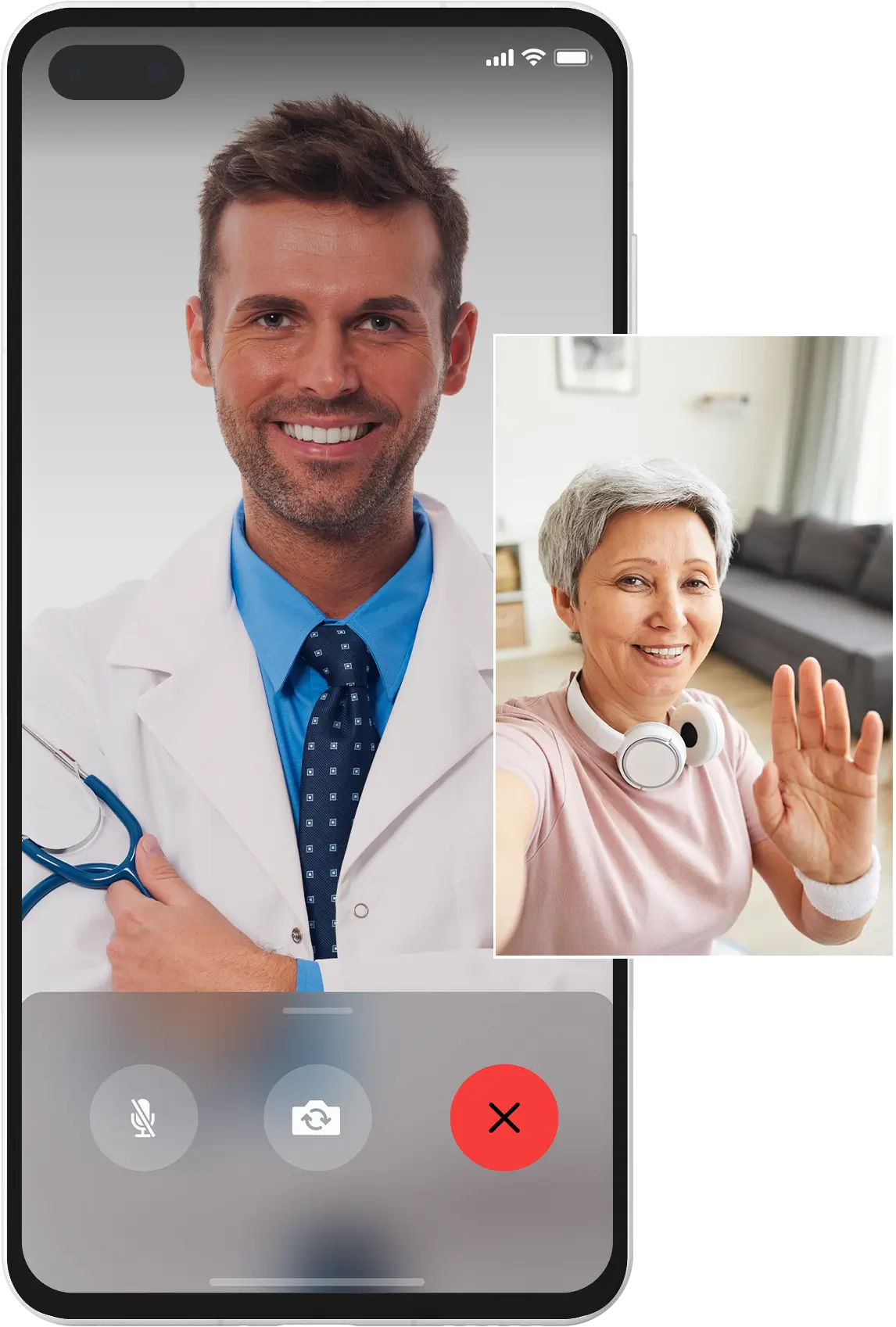
Get Doctors - 365 App !
Consult with qualified doctors of any profile in online video, audio and chat 24/7